- By default, individual capital losses are capped at $3,000 per year against ordinary income. The rest carries forward indefinitely — usable only against future capital gains plus another $3,000/year.
- A valid §475(f) mark-to-market election may convert trading gains and losses to ordinary income/loss — meaning the full loss typically deducts in the year it occurs, with no $3K cap.
- §475 also eliminates the wash sale rule for trader-business trades, and has long made §475 income §199A QBI-eligible — a meaningful win even in profitable years, and not something new under OBBBA.
- §475 is typically only available to traders who qualify for trader tax status (TTS) — meaning frequent, substantial, short-term trading. Casual investors generally cannot elect §475.
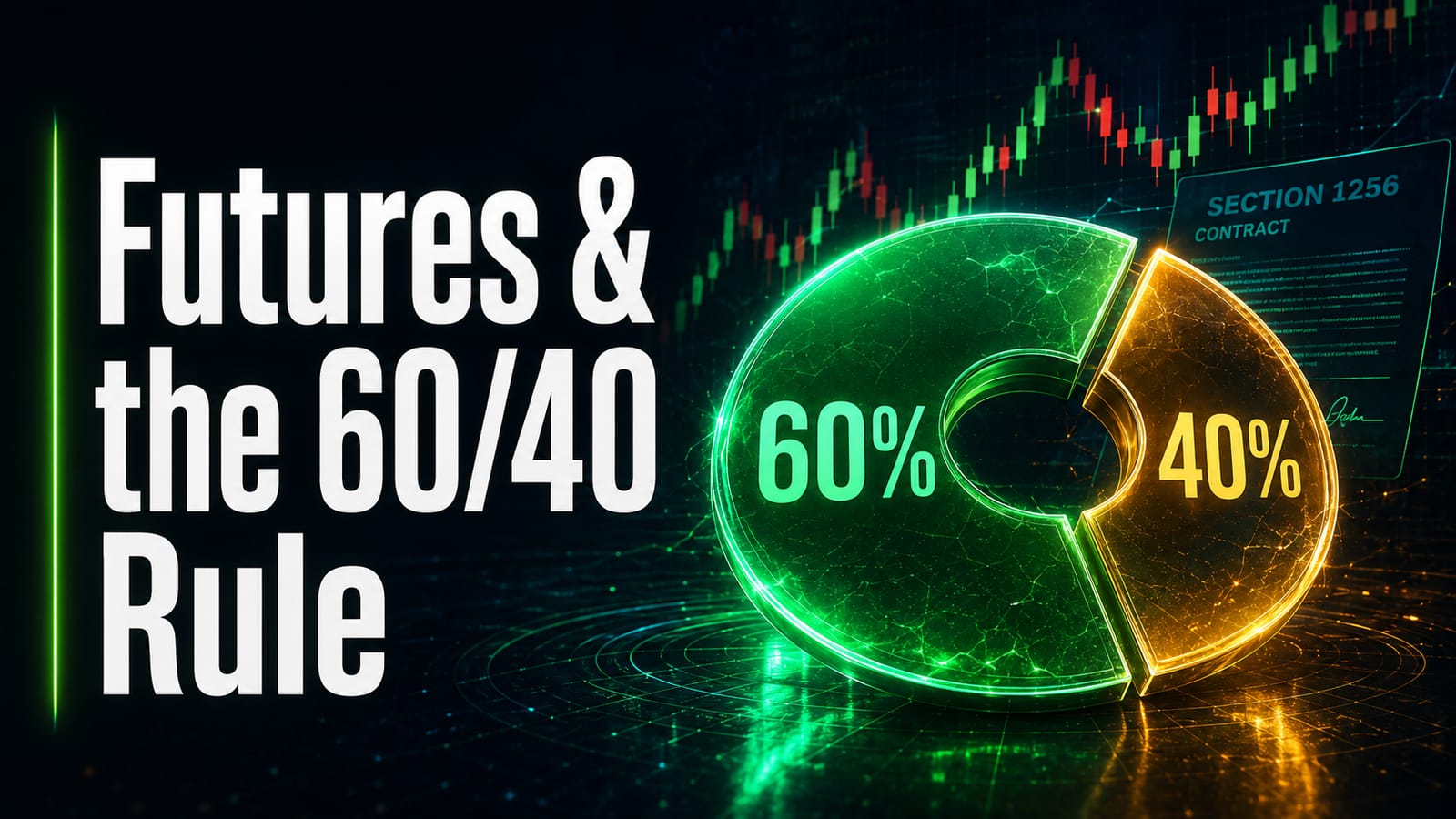
- The election is hard to reverse and converts winning trades to ordinary income too (losing Section 1256 60/40 + LTCG treatment). For futures-only traders with consistently profitable years, §475 often does not pencil out. A CPA models both paths before electing.
The $50K Loss Year, Worked Out
Both columns are the same trader. Same year. Same $50,000 in trading losses. The only difference is whether a §475 election was in place — and which CPA is filing the return.
| Line Item | Default (No Election) | With §475(f) Election |
|---|---|---|
| Net trading loss | ($50,000) | ($50,000) |
| Treated as | Capital loss | Ordinary business loss |
| Current-year deduction | $3,000 (capped) | $50,000 (full) |
| Loss locked into carryforward | $47,000 | $0 |
| Wash sale rule applies? | Yes (more disallowed loss) | No (§475 trades exempt) |
| §199A QBI eligible? | No | Yes (long-standing rule) |
| Estimated current-year tax refund/offset (at ~30% marginal rate) | ~$900 | ~$15,000 |
The $15,000 refund/offset is a typical-case estimate at a ~30% combined federal + state marginal rate. Actual savings depend on your other income, your marginal rate, your state, and whether TTS is established. The election decision also depends on whether you expect future profitable years (where §475 converts capital gains to ordinary). A CPA models BOTH paths on YOUR numbers before any election is filed.
§475: A Long-Standing Election, Not a New 2026 Rule
The two features that make §475 valuable in profitable years are sometimes credited to the One Big Beautiful Bill Act (OBBBA, signed July 2025) — but both predate it:
- §199A QBI eligibility — §475-elected trader income has been treated as QBI-eligible since the IRS finalized its §199A regulations in January 2019, years before OBBBA. Up to 20% of qualified business income can typically be deducted, on top of the ordinary-loss treatment.
- Wash-sale + capital-loss-cap exemption — §475 ordinary losses have been exempt from the wash-sale rule and the $3,000 capital-loss cap since the Taxpayer Relief Act of 1997, which extended mark-to-market accounting to traders.
What OBBBA actually changed for §475 traders: it made the §199A 20% QBI deduction itself permanent, removing a scheduled 2025 expiration — so the QBI benefit above stays in place going forward instead of sunsetting. For an active trader with TTS, that combination has long made §475 "structurally advantageous in most years," not just in loss years.
"Doesn't TurboTax handle this?"
TurboTax does not file §475 elections. The election requires a statement attached to your prior-year return (or Form 3115 for first-year traders), and a CPA-level determination that you qualify for trader tax status. Even if you somehow filed the election yourself, an IRS audit of trader status — which is more common than for any other small-business category — is not something a $99 software package defends. Most general CPAs see one to three trader returns a year. TraderTax-matched CPAs file hundreds. The difference shows up in elections like §475 that most practitioners avoid because they've never done one.
How a §475 Election Actually Gets Filed
This is a precision-timed paper filing, not a checkbox in your return software. A TraderTax-matched CPA typically handles every step:
- Confirm trader tax status (TTS) qualification — the IRS evaluates frequency, volume, intent, and time commitment. Without TTS, §475 generally is not available.
- For existing traders — attach a §475(f) election statement to the prior-year individual return, filed by the April 15 deadline (or the entity-return deadline, depending on structure).
- For new traders — file Form 3115 (Application for Change in Accounting Method) to elect mid-year, subject to IRS approval.
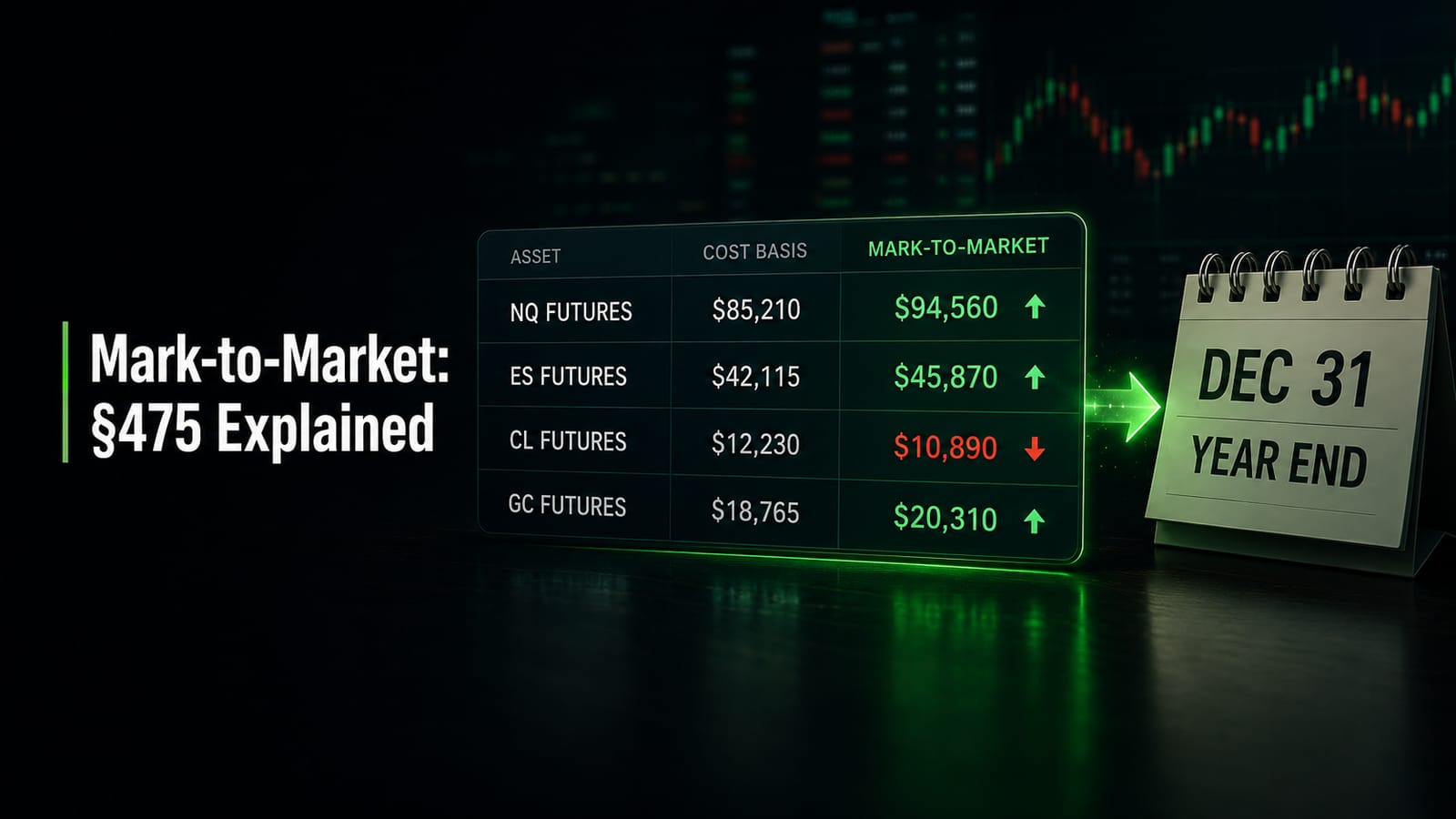
- Year-end mark-to-market — all open positions are marked to fair market value as of December 31 and gain/loss recognized.
- File trader expenses on Schedule C (with the entity if applicable), and §475 trading P&L on Form 4797 ordinary income/loss.
- Maintain the election in future years — §475 is hard to revoke and applies to all future trading activity once elected.
When §475 Is NOT the Right Answer
Honest caveat: §475 doesn't help every trader. Cases where it typically doesn't pencil out:
- Futures-only traders with consistently profitable years — Section 1256 60/40 (60% LT + 40% ST) often beats ordinary income treatment at high marginal rates
- Traders holding positions over a year — §475 forces ordinary income on positions you'd otherwise tax at long-term capital gains rates (up to 23.8% vs up to 37%)
- You don't qualify for trader tax status — §475 generally is not available to investors or casual traders
- You expect trading volume to drop significantly — the election is hard to revoke, so don't elect if you're winding down
Frequently Asked Questions
How much can the §475 mark-to-market election save a losing trader?
Depends on the size of the loss and the trader's marginal tax rate. On a $50,000 trading loss, default treatment caps the deduction at $3,000 per year; a valid §475(f) election typically converts the full $50,000 to an ordinary loss in the year it occurs, which at a 30% marginal rate translates to roughly $15,000 in current-year tax refund or offset. Every situation varies — confirm with a CPA.
Who qualifies for a §475 mark-to-market election?
§475(f) is generally available to traders who qualify for trader tax status (TTS) — frequent, substantial, short-term trading. Investors and casual traders generally cannot elect §475. The election is filed by attaching a statement to the prior-year return by the April 15 deadline; new traders may use Form 3115. A trader-specialist CPA confirms qualification before filing.
Does §475 still help if I had a profitable year?
Yes — for two long-standing reasons. First, §475 income has been §199A QBI-eligible since the IRS finalized its regulations in January 2019 — up to a 20% deduction on qualified business income may apply. Second, §475 trades have been exempt from the §1091 wash-sale rule since 1997, eliminating one of the biggest tax-drag mechanics for active traders. Neither is new under OBBBA. The election generally makes sense for traders who expect ongoing high trading volume, not just for one-time loss years.
What are the downsides of electing §475?
§475 trades are taxed as ordinary income, not capital gains. For a winning year, that means losing access to Section 1256 60/40 treatment on futures and long-term capital gains rates on year-plus holdings. The election is hard to reverse and requires year-end mark-to-market valuation. For futures-only traders with consistently profitable years, §475 often does not make sense. For options/equities traders with high volatility or loss exposure, it frequently does. A CPA models both paths before electing.
See If §475 Could Save YOU Thousands
Answer 8 quick questions about your trading. Get a personalized AI summary on whether trader tax status applies, whether §475 makes financial sense for your numbers, and what the worked savings would be — reviewed by a real CPA.
Get My Free Tax Snapshot →3 Ways to Get Started
Tax Snapshot
2-minute AI assessment of your trader status + §475 fit.
Start Snapshot →§475 Deep Dive
Full guide to the mark-to-market election + worked examples.
Read the Guide →Get Matched
Skip ahead — pair with a TraderTax CPA who files §475 elections.
Get Matched →Adjacent topics most §475-curious traders also need to think through: